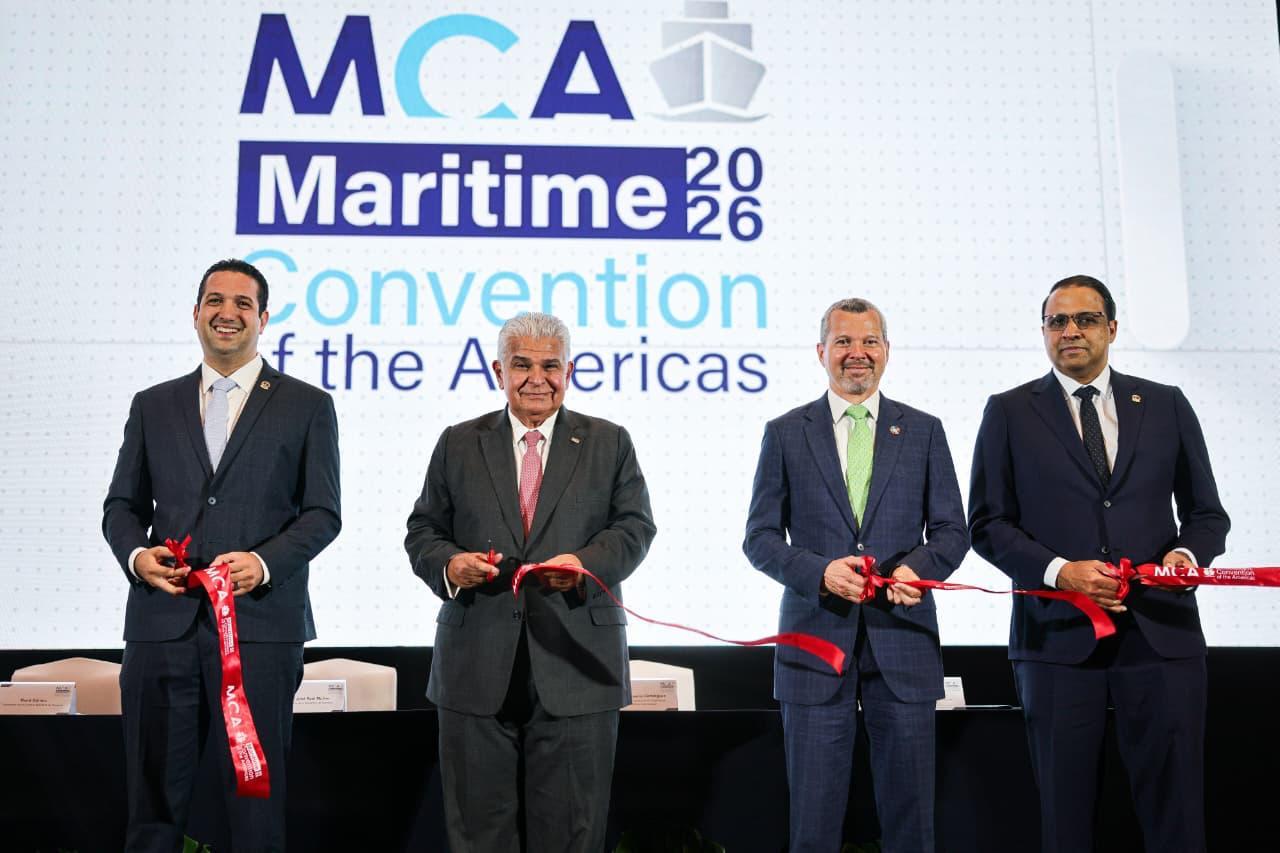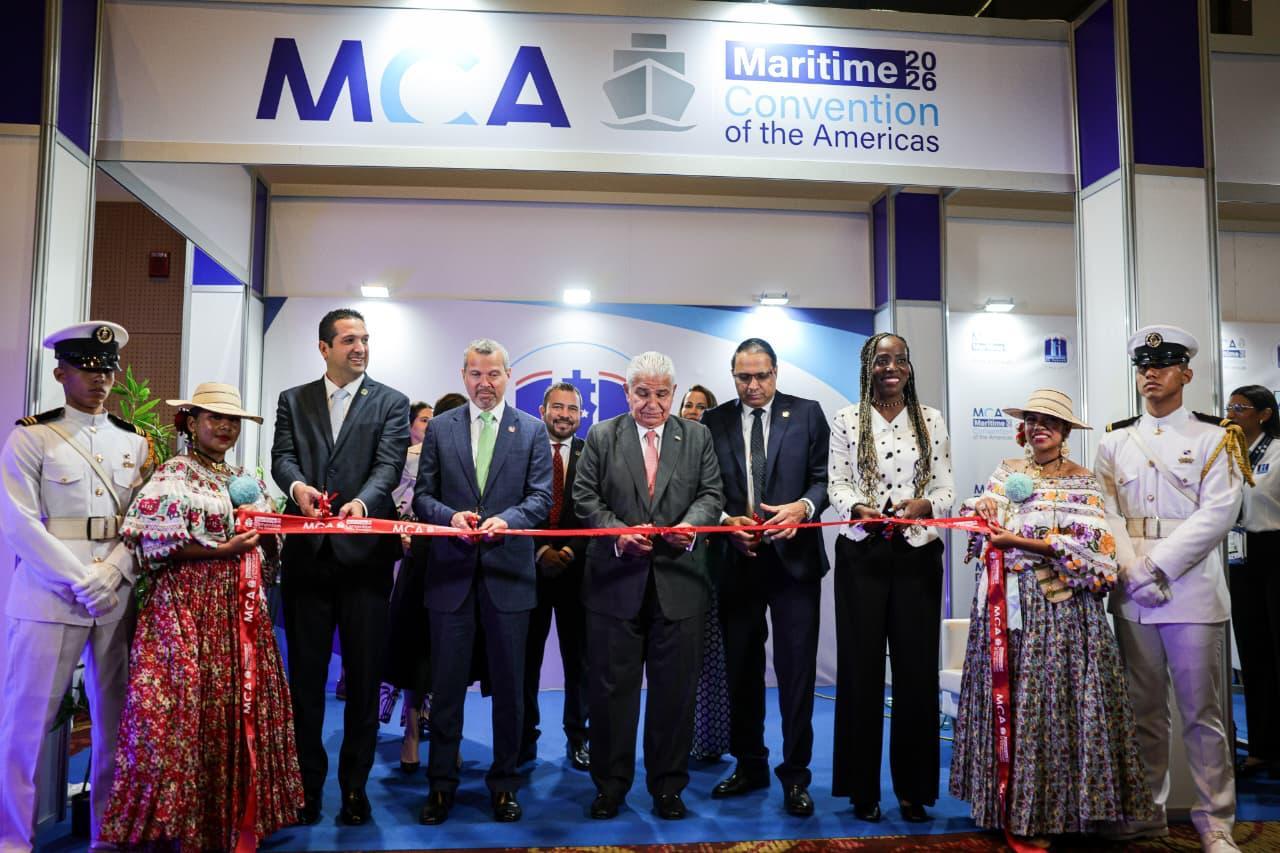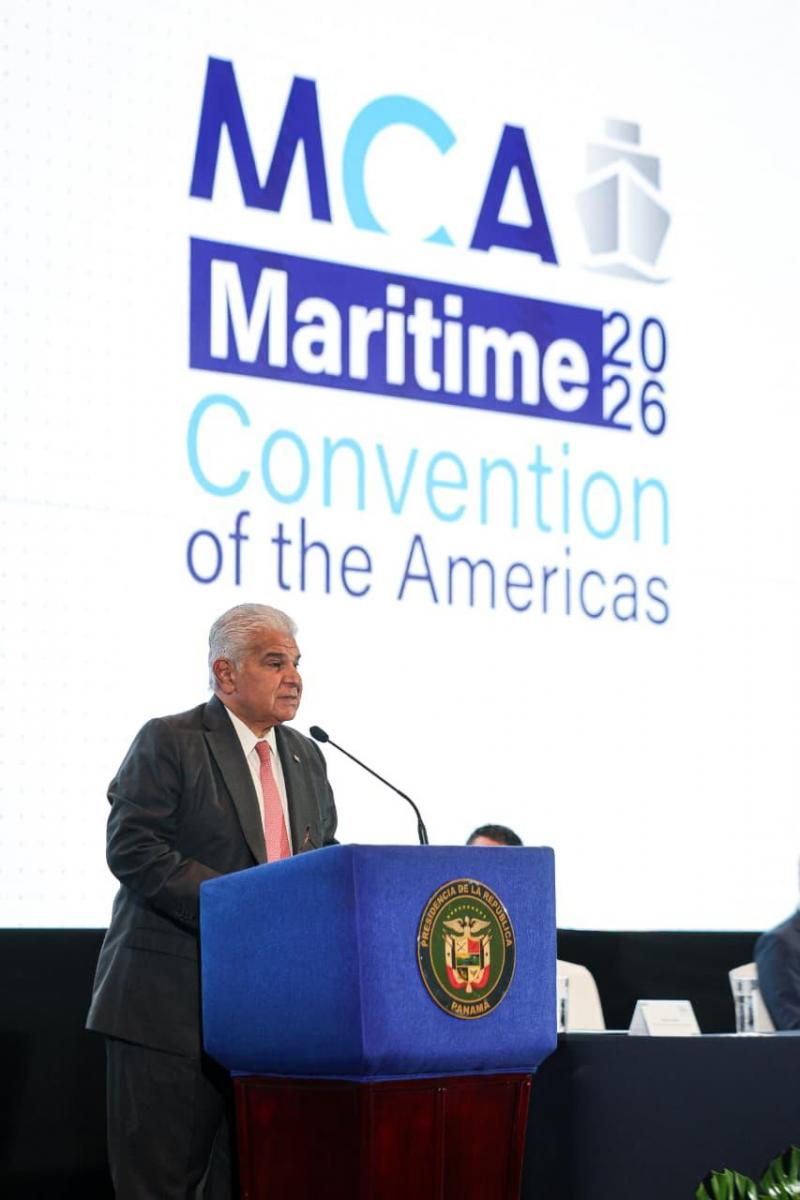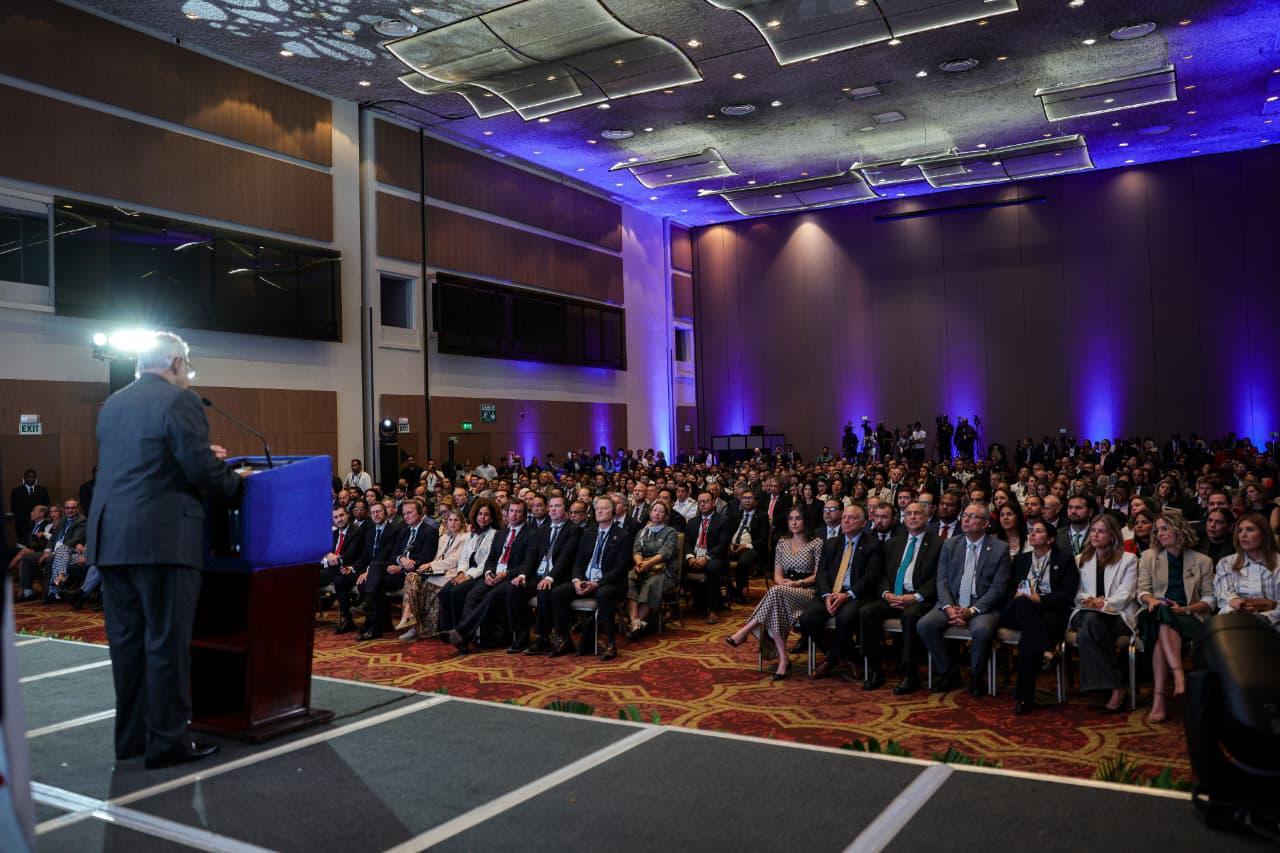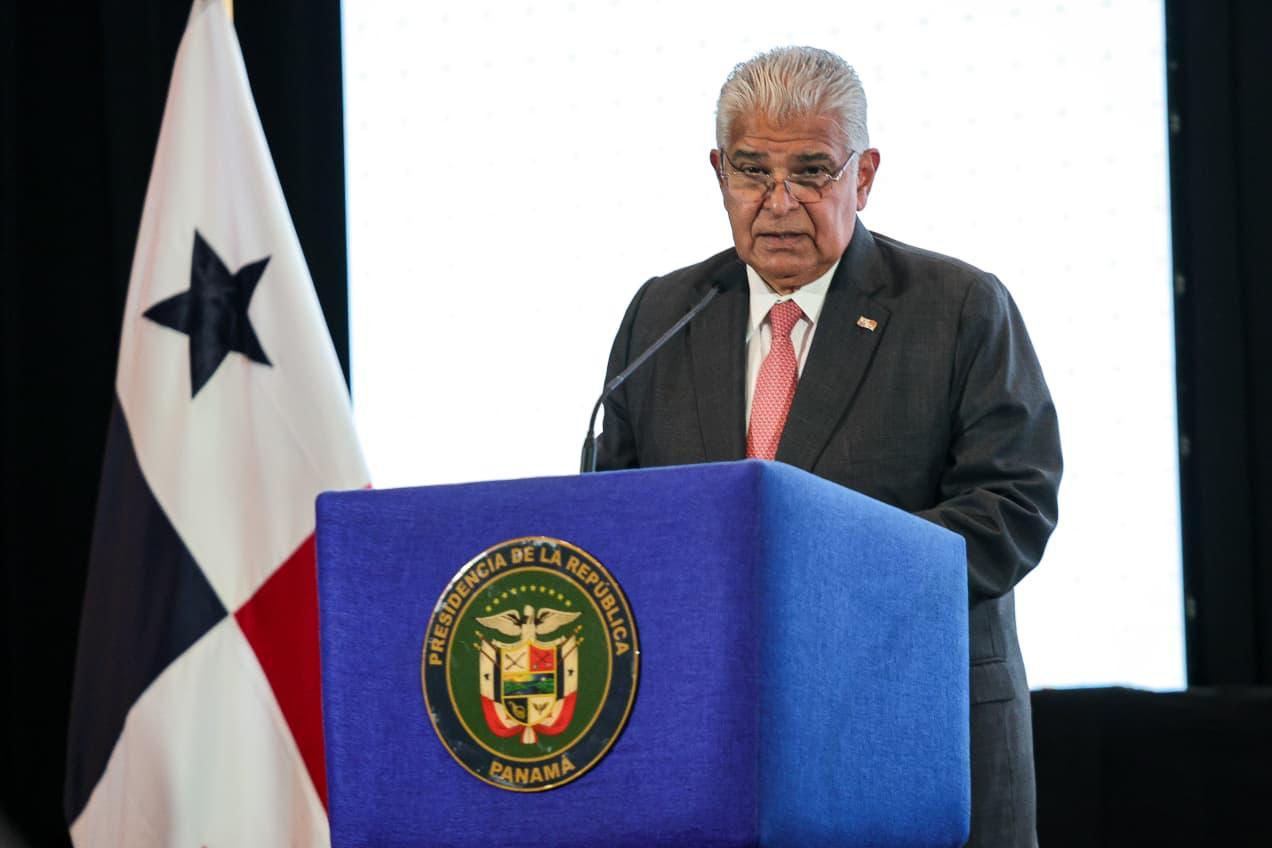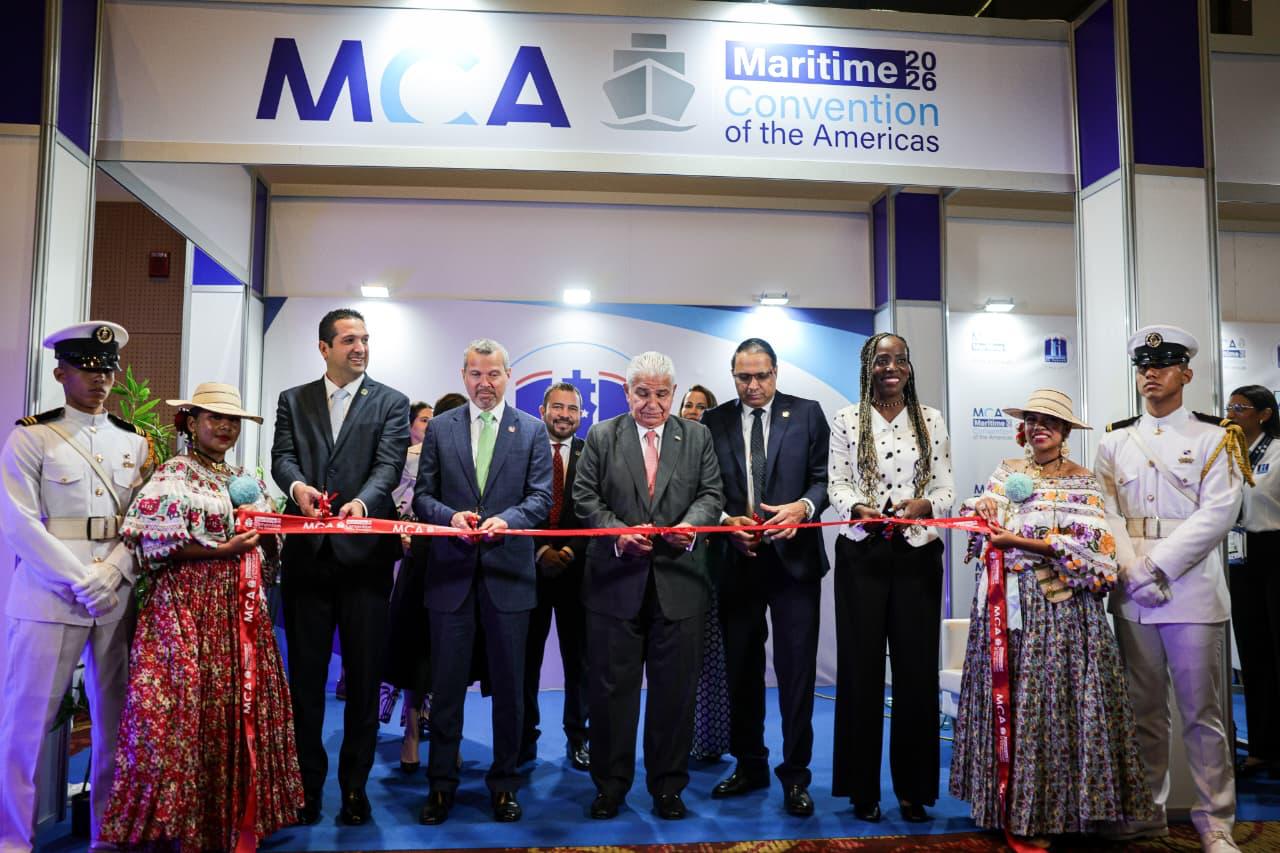
El presidente de la República, José Raúl Mulino, destacó este jueves, durante la inauguración de la Convención Marítima de las Américas 2026, que el Gobierno Nacional está impulsando y apoyando numerosos proyectos que mejorarán el desempeño de nuestro sector marítimo y logístico, crearán miles de nuevos empleos bien remunerados, potenciarán nuestra proyección internacional y dinamizarán la economía.
Esta convención, que organiza la Cámara Marítima de Panamá, es el principal encuentro de negocios del sector marítimo, logístico y portuario del hemisferio occidental.
El mandatario fue enfático al señalar que, en medio de la volatilidad y conflictos que actualmente imperan en el mundo, Panamá ha mantenido su posición de que la neutralidad del Canal interoceánico es inquebrantable.
De igual forma, enfatizó la sólida defensa que hace Panamá de su régimen de abanderamiento de naves. “Panamá no acepta arbitrariedades. Detrás de una embarcación con nuestra bandera está nuestro país que la defiende. Esa es la gran diferencia con otros competidores. Nosotros no somos una franquicia, somos un país detrás de su registro”, recalcó Mulino.
También dio la bienvenida al alivio de las tensiones generadas por detenciones de buques con bandera panameña en puertos de la República Popular China, y consideró como un gran paso que el gigante asiático haya llamado a conversaciones.
“Exigimos y velamos por el respeto a las convenciones internacionales. Panamá no solo gestiona la vía; ahora también colabora, aunque sea en pequeña proporción, al financiamiento de esa flota”, declaró.
Refiriéndose a la próxima concesión de los puertos de Balboa y Cristóbal, el presidente recordó a los presentes que se está implementando un plan para garantizar la continuidad operativa de ambas terminales, que revisten una importancia vital para el comercio mundial.
“Hoy funcionan con normalidad y garantizamos que nuestro país siga sirviendo al comercio mundial de manera eficiente”, indicó. “Ambos puertos serán concesionados, por separado, en un nuevo proceso que favorezca la inversión, la transparencia y la actividad logística”.
Otra futura concesión mencionada por Mulino es la de isla Margarita, la cual se espera convocar a licitación internacional antes de fin de año. “Mi objetivo es aumentar la competitividad de nuestro sistema portuario, proporcionar servicios de clase mundial y coordinar las iniciativas a través del Gabinete Logístico”, explicó.
En este sentido, Mulino aprovechó para expresar su regocijo por la reciente noticia de que Panamá registró una notable mejora en su nivel de riesgo financiero internacional, y ubicarse en la cuarta posición de naciones con menor riesgo país de toda América Latina, de acuerdo con el indicador Emerging Markets Bond Index, que elabora JP Morgan Chase & Co.
“Esos son los factores de referencia que busca cualquier inversionista respecto del país donde pretende invertir dinero”, detalló el mandatario.
Adicional a los planes de concesiones portuarias, el Gobierno Nacional también está dando todo su apoyo a las iniciativas de la Autoridad del Canal de Panamá (ACP), como el proyecto de reservorio multipropósito del río Indio, que asegura la disponibilidad de agua para las operaciones canaleras y para el consumo de los habitantes de Panamá y Colón.
“Por otro lado, el Canal licitará próximamente la construcción del gasoducto que permitirá liberar espacio en el tránsito de buques. Junto a esto, dos proyectos más se encuentran en la cartera de la Autoridad del Canal: los puertos de Corozal y Telfers”, destacó Mulino. “Estas dos nuevas terminales adicionarán 7 millones de TEU a la capacidad actual”.
El mandatario hizo énfasis en el compromiso de su gobierno con la reducción de la huella de carbono de la cadena de suministro, acompañando el Net Zero Slot del Canal, una iniciativa pionera que incentiva a los buques con emisiones bajas o nulas a tener tránsito expedito en un máximo de 24 horas.
Sobre la modernización de la Marina Mercante, anunció que en julio próximo se presentará ante la Asamblea Nacional un proyecto de ley que la reorganizará, con visión de futuro, volviéndola más competitiva y menos rígida en cuanto a la burocracia y a la toma de decisiones por parte de quienes la regenten.
“Necesitamos más ingenieros en logística, expertos en ciberseguridad marítima, técnicos en mantenimiento de motores híbridos y especialistas en gestión de datos. Y lo haremos junto a instituciones de formación, educación e investigación del país”, declaró.
Por su parte, el secretario general de la Organización Marítima Internacional, Arsenio Domínguez, reconoció que el tener al presidente Mulino en un evento de este nivel demuestra el compromiso de Panamá para seguir avanzando en su sector marítimo y logístico.
A su vez, el presidente de la Cámara Marítima de Panamá, René Gómez, destacó que Panamá conecta más de 140 rutas marítimas, enlaza 160 países y concentra cerca del 25% del PIB nacional vinculado a los servicios marítimos y logísticos. “Esta convención es una vitrina para mostrar esa fortaleza al mundo”, recalcó.
President of the Republic, José Raúl Mulino, reaffirmed Panama’s unwavering commitment to the maritime and logistics sector during the inauguration of the Maritime Convention of the Americas 2026, emphasizing that the National Government is actively driving forward a portfolio of transformative projects designed to elevate the nation’s maritime performance, generate thousands of high-quality jobs, strengthen Panama’s global standing, and inject new momentum into the economy.
Organized by the Panama Maritime Chamber, the convention stands as the premier business gathering for the maritime, logistics, and port industries across the Western Hemisphere.
Addressing an audience of international industry leaders, President Mulino underscored that amid growing geopolitical volatility and global uncertainty, Panama remains steadfast in its position that the neutrality of the interoceanic Canal is untouchable and non-negotiable.
He also delivered a strong defense of Panama’s ship registry regime, emphasizing the nation’s commitment to protecting vessels sailing under its flag.
“Panama does not accept arbitrariness. Behind every vessel bearing our flag stands a country that defends it. That is the great difference between us and many of our competitors. We are not a franchise — we are a nation standing firmly behind its registry,” Mulino declared.
The President welcomed the easing of tensions surrounding the detention of Panamanian-flagged vessels in ports of the People’s Republic of China, describing the reopening of diplomatic dialogue as a significant and constructive step forward.
“We demand and uphold respect for international conventions. Panama not only manages the maritime route; today, it also contributes — even if modestly — to financing the fleet that transits it,” he stated.
Referring to the upcoming concessions of the ports of Balboa and Cristóbal, Mulino assured the international community that Panama is implementing a strategic continuity plan to safeguard the uninterrupted operation of both terminals, whose importance to global commerce remains critical.
“Today they continue operating normally, and we guarantee that our country will keep serving world trade efficiently,” he affirmed. “Both ports will undergo separate concession processes designed to encourage investment, transparency, and logistical growth.”
Another major project highlighted by the President was the future concession of Margarita Island, expected to enter an international bidding process before the end of the year.
“My objective is to increase the competitiveness of our port system, deliver world-class services, and coordinate these initiatives through the Logistics Cabinet,” Mulino explained.
In this context, the President also celebrated Panama’s recent improvement in international financial risk rankings, noting that the country now holds the fourth-lowest country risk position in Latin America according to the Emerging Markets Bond Index prepared by JP Morgan Chase & Co.
“These are the benchmark indicators every investor evaluates when deciding where to place their capital,” he noted.
Beyond port concessions, the National Government is also backing strategic initiatives led by the Panama Canal Authority, including the Río Indio multipurpose reservoir project, aimed at guaranteeing water availability for Canal operations as well as for residents of Panama and Colón.
Additionally, Mulino announced that the Canal will soon tender the construction of a gas pipeline that will optimize vessel transit capacity by freeing critical operational space. He further revealed that two additional projects — the ports of Corozal and Telfers — remain part of the Canal Authority’s long-term development portfolio.
“These two new terminals will add seven million TEUs to the current capacity,” he emphasized.
The President also highlighted his administration’s commitment to reducing the carbon footprint of global supply chains by supporting the Canal’s pioneering Net Zero Slot initiative, which rewards low- and zero-emission vessels with expedited transit in under 24 hours.
Turning to the modernization of Panama’s Merchant Marine sector, Mulino announced that a new legislative proposal will be submitted to the National Assembly this July to restructure the institution with a forward-looking vision, making it more competitive, agile, and less constrained by bureaucracy.
“We need more logistics engineers, maritime cybersecurity experts, hybrid engine maintenance technicians, and data management specialists. And we will achieve this together with the country’s educational, research, and training institutions,” he stated.
For his part, Arsenio Domínguez acknowledged that President Mulino’s presence at an event of this magnitude sends a powerful signal of Panama’s determination to continue advancing its maritime and logistics leadership.
Meanwhile, René Gómez emphasized that Panama connects more than 140 maritime routes, links 160 countries, and generates nearly 25% of the nation’s GDP through maritime and logistics services.
“This convention is a showcase for the world to witness the strength of Panama’s maritime platform,” Gómez concluded.